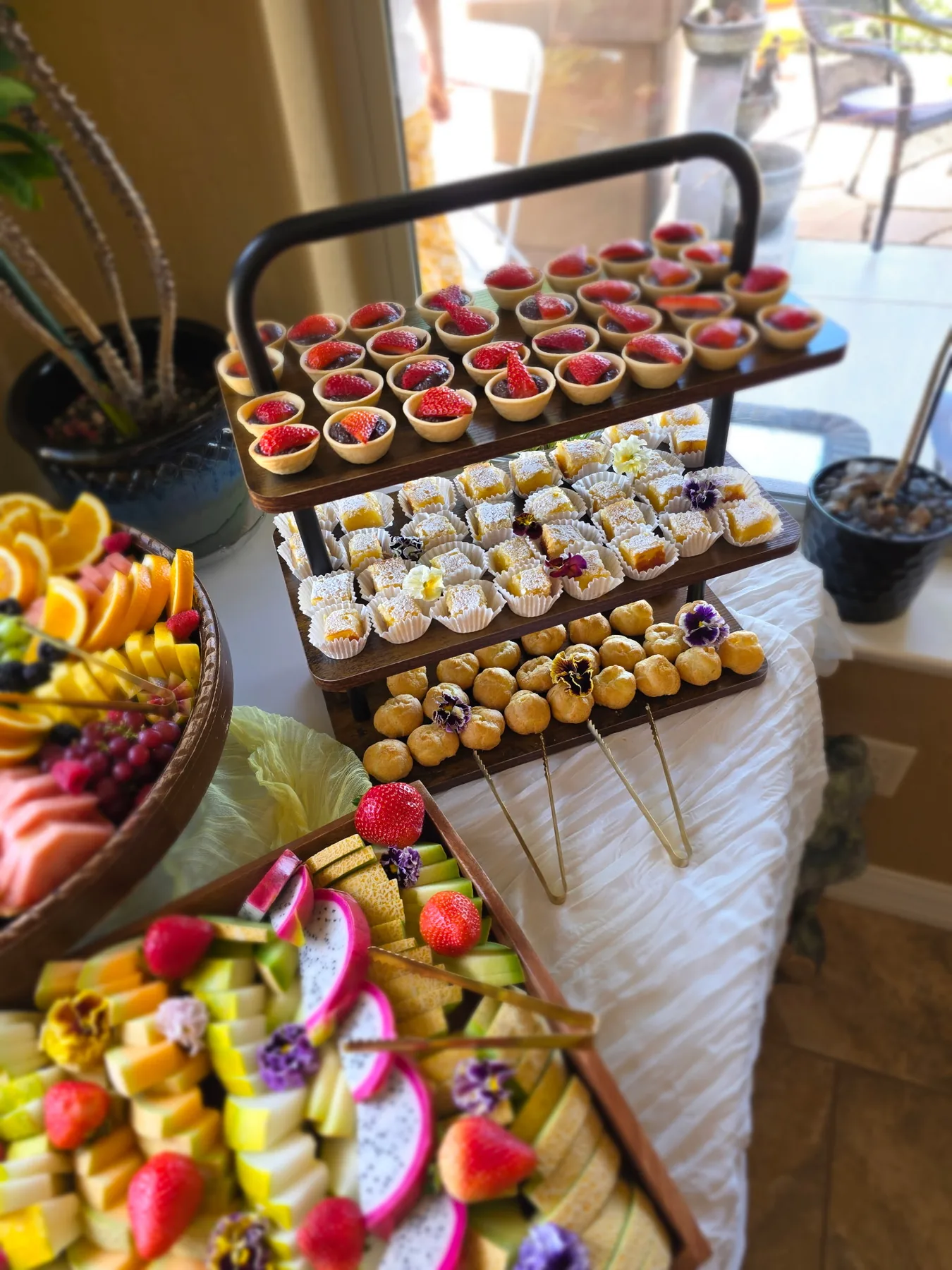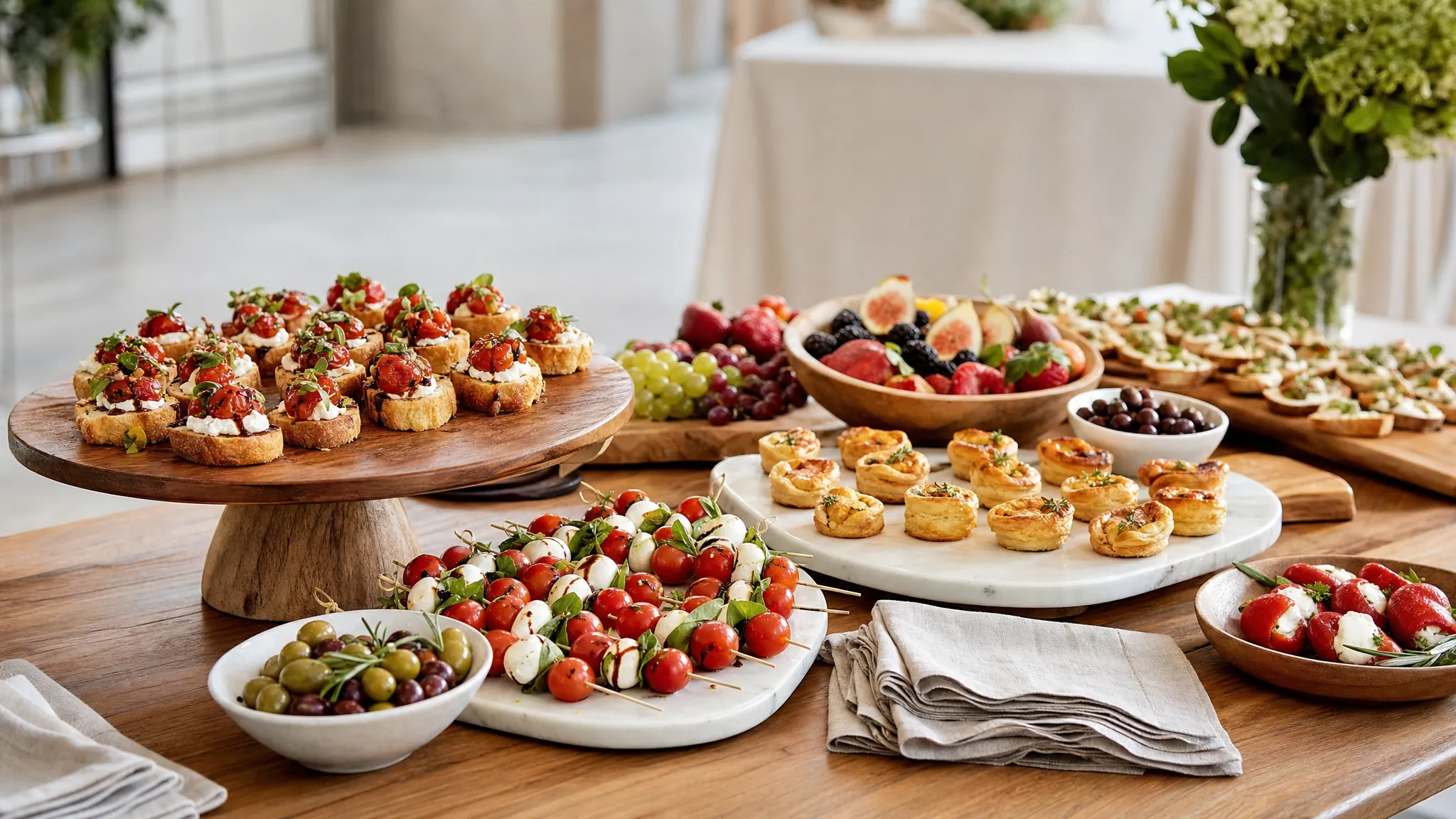

Wedding cocktail hour food sets the tone for the celebration. It is the first chance for guests to settle in, congratulate you, find their people, and enjoy something generous before the next part of the day begins.
The best plan is not a longer list of appetizers. It is a menu and service rhythm that match your timeline, guest list, and venue. A beautiful grazing table can make the room feel welcoming. Passed bites can reach people who are caught up in conversation. One warm, satisfying option can keep the hour from feeling like a wait for dinner.
For couples planning a Prescott celebration, Dolce’s wedding cocktail-hour catering brings those food moments together around your venue, timeline and guest experience.
Start with the job cocktail hour needs to do
Before choosing food, look at the space between your ceremony and dinner. A 45-minute welcome after a ceremony needs something different from a 90-minute stretch while you take photos, guests move to another venue area, or the reception room is reset. The more time guests spend standing and socializing, the more the food has to carry the moment.
For a shorter cocktail hour before a full dinner, light but thoughtful food is usually enough. Fresh vegetables, fruit, cheeses, crostini, skewers, and a few passed bites create an easy welcome without competing with the meal to come. If dinner will be later, add a heartier option such as a mini sandwich, savory pastry, substantial vegetarian bite, or warm appetizer served in waves.
Think about the people in the room, too. Guests traveling in, parents managing young children, and anyone arriving straight from work may be hungrier than the timeline suggests. Writing down the ceremony end time, intended dinner time, and likely arrival pattern gives you a far better starting point than guessing.
Build a menu guests can enjoy with one hand
At cocktail hour, people are rarely seated with a full place setting. They are holding a drink, greeting family, taking photos, and finding their way around the venue. Food that requires cutting, balancing a bowl, or navigating a dripping sauce can pull them out of that moment. The easiest bites are compact, stable, and satisfying in two or three bites.
A balanced wedding cocktail-hour menu gives guests four useful things to choose from: something crisp and fresh, something familiar, something warm or hearty, and something visually abundant. That might mean vegetable cups or caprese skewers, a classic crostini, a warm savory pastry, and a grazing display filled with cheeses, fruit, cured meats, and thoughtful accompaniments.
Contrast is what makes the table feel generous. Pair creamy with crisp, warm with chilled, and salty with fruit or herbs. A little variety lets people build a plate that feels right for them without creating a scattered, overcomplicated menu.

Choose service that keeps the room moving
The service style matters as much as the menu. A single food table can look gorgeous and still become crowded if everyone arrives at once. A grazing display gives guests a place to gather, but passed appetizers bring food to people who have drifted to the bar, patio, or family conversation on the other side of the room.
For many weddings, the strongest plan is a mix. Start with a central display that looks full when guests enter, then use passed bites to keep the food circulating. This lets the display set the scene while the service reaches guests who might never stop at the table. Dolce’s custom charcuterie can create that welcoming centerpiece, while cocktail-hour catering adds passed finger foods and smaller display bites around the flow of your reception.
Venue layout should guide the decision. If guests will be split between a lawn and a patio, use more than one food point or pass trays through both areas. If the bar is in a different room from the main display, make sure food reaches the bar crowd too. If photos will keep some guests moving in and out, build a replenishment plan so late arrivals see a spread that still feels cared for.

Plan portions around timing, not a magic number
There is no one appetizer count that works for every wedding. A daytime garden ceremony followed by an early dinner calls for a different approach than an evening wedding where dinner begins after sunset. The useful question is not, “How many choices should we have?” It is, “What do guests need to feel comfortable until the next substantial food arrives?”
For a brief transition, focus on variety and presentation. For a longer gap, make sure there is enough of at least one more filling bite to satisfy someone who missed lunch. Build in refreshes rather than placing every tray out at once. Smaller replenished platters look better, help food stay at its intended temperature, and prevent the table from feeling picked over halfway through the hour.
It is also wise to plan for a first rush. When the ceremony ends, many guests move toward food at the same time. The opening display should be ready before the first guest arrives, with napkins, small plates, and serving tools visible. Then the service can shift into a calmer rhythm as the crowd spreads across the venue.
Coordinate food, drinks, and the first welcome
Guests notice the first few minutes of cocktail hour more than they realize. They are looking for a drink, checking where to stand, finding friends, and deciding whether they should head toward the food. When the bar, food, water, and napkins all compete for the same small corner, the room can feel crowded before the reception has really begun.
Give each moment a little breathing room. Put water where guests can see it, not only at the bar. Keep napkins and small plates close to every food point. If a bite is saucy or more delicate, give it a sturdy vessel or a nearby cocktail table where guests can set down a drink. These small choices make the menu easier to enjoy and keep formal clothing, hands, and conversation out of trouble.
Consider the opening welcome too. A few passed bites near the first guest path can make people feel immediately looked after, while the main grazing display becomes a destination once they have settled in. For a local wedding with several moving parts, Dolce’s Prescott catering approach can help shape the food experience around the way your day will actually unfold.
Share the timeline with the people serving the food
A polished cocktail hour depends on details that are easy to miss when you are focused on the ceremony. Your catering team should know when guests are expected to leave the ceremony area, when you will be taking photos, how dinner service begins, whether there is a room flip, and whether toasts or an entrance will pause the flow. Those moments determine when food should appear, be passed, and be refreshed.
It helps to identify one person who can make small timing decisions on the day. That could be a planner, venue coordinator, or trusted family member who knows whether the ceremony is running late or guests are already moving toward cocktail hour. The goal is not to create more decisions for you. It is to make sure the food plan can flex gracefully when the real day moves a little faster or slower than the schedule.
Ask the practical questions in advance: Where can the team stage backup trays? Who opens the service area? Are there stairs, long walks, or narrow doorways between the kitchen and the reception? Is there shade for outdoor food? Thoughtful answers behind the scenes are what let guests experience the hour as effortless.
Make dietary needs part of the first conversation
Guests should not have to work to find something they can enjoy. Ask for allergy and dietary notes early, then make room for choices that feel intentional: a substantial vegetarian option, a clearly handled gluten-conscious bite, and familiar food for guests who are less adventurous. A menu with contrast is naturally easier to make welcoming because it already includes more than one texture, flavor, and ingredient style.
For serious allergies, a label alone is not the whole plan. Talk through handling, separation, serving utensils, and what the guest can safely expect. The U.S. government’s wedding food-safety guidance also recommends sharing allergy and dietary information with the caterer before the event, rather than leaving those needs for the day itself.
Protect the food when the celebration is outside
Outdoor weddings can be especially beautiful at cocktail hour, but they ask more of the service plan. Sun, wind, warm temperatures, and a long stretch of mingling all affect how food holds up. Give chilled foods shade, keep them in smaller batches, and have fresh trays ready to rotate in. Warm bites need their own plan, whether that is a warming setup or timing that brings them out when they will be enjoyed.
For foods that need temperature control, keep the basics in view. The U.S. Department of Agriculture explains that food should not remain in the temperature danger zone, between 40°F and 140°F, for more than two hours, or one hour when the temperature is above 90°F. Its food safety overview is a useful planning reference for a warm outdoor reception.
Those details do not have to make the setting feel clinical. They simply shape a better hosting plan: smaller trays, a shaded food area, backup portions held at the right temperature, and drinks in a separate zone so guests are not all crowding the same table.
Give cocktail hour a memorable finish
Not every wedding needs dessert at cocktail hour, but a small sweet moment can be especially effective when dinner will be later or when you want the food to become part of the experience. It can be as simple as a few composed dessert portions, or it can be more interactive, with something finished as guests gather around.
Dolce’s interactive desserts bring fresh-filled cannolis and tiramisu into the celebration as a guest experience rather than an afterthought. It works well after savory passed bites or alongside a grazing display, and it gives guests one more reason to pause, talk, and enjoy the reception before dinner. For a coordinated food-and-details moment, a fresh flower bar can add another hands-on experience guests take home with them.

Let the food reflect the kind of welcome you want to create
The most successful wedding cocktail hours feel easy because the planning behind them is invisible. Guests find good food without a line, have choices that suit them, and move through the space without feeling rushed or hungry. That is the real goal, not a complicated menu for its own sake.
Dolce Fresh Market & Catering can shape wedding cocktail-hour food around your guest count, venue, and timeline, from a grazing centerpiece to passed bites and dessert moments. Browse the gallery to see the kind of food experiences Dolce brings to gatherings, explore event inspiration, or start planning your wedding food when the details are coming together.
Frequently asked questions
How much food should I serve at a wedding cocktail hour?+
The right amount depends on how long guests will be waiting before dinner and whether the cocktail hour is the main food moment. A short transition needs a lighter mix, while a longer gap needs at least one more substantial bite and a clear replenishment plan.
What food is best for a wedding cocktail hour?+
The strongest menu combines easy one-hand bites, a fresh option, something warm or hearty, and a visually generous centerpiece. Guests should be able to find something familiar, something satisfying, and something that fits the mood of the celebration.
Should I serve passed appetizers or a grazing table at my wedding?+
Both can work beautifully. A grazing table gives the room a welcoming focal point, while passed appetizers bring food to guests wherever they are mingling. Many weddings benefit from a blend of the two, especially when the cocktail hour takes place across a patio, lawn, or more than one room.
Can Dolce help with wedding cocktail-hour food in Prescott?+
Yes. Dolce can shape grazing displays, passed bites, interactive desserts, and other food moments around your guest count, venue, timeline, and the kind of welcome you want to create.