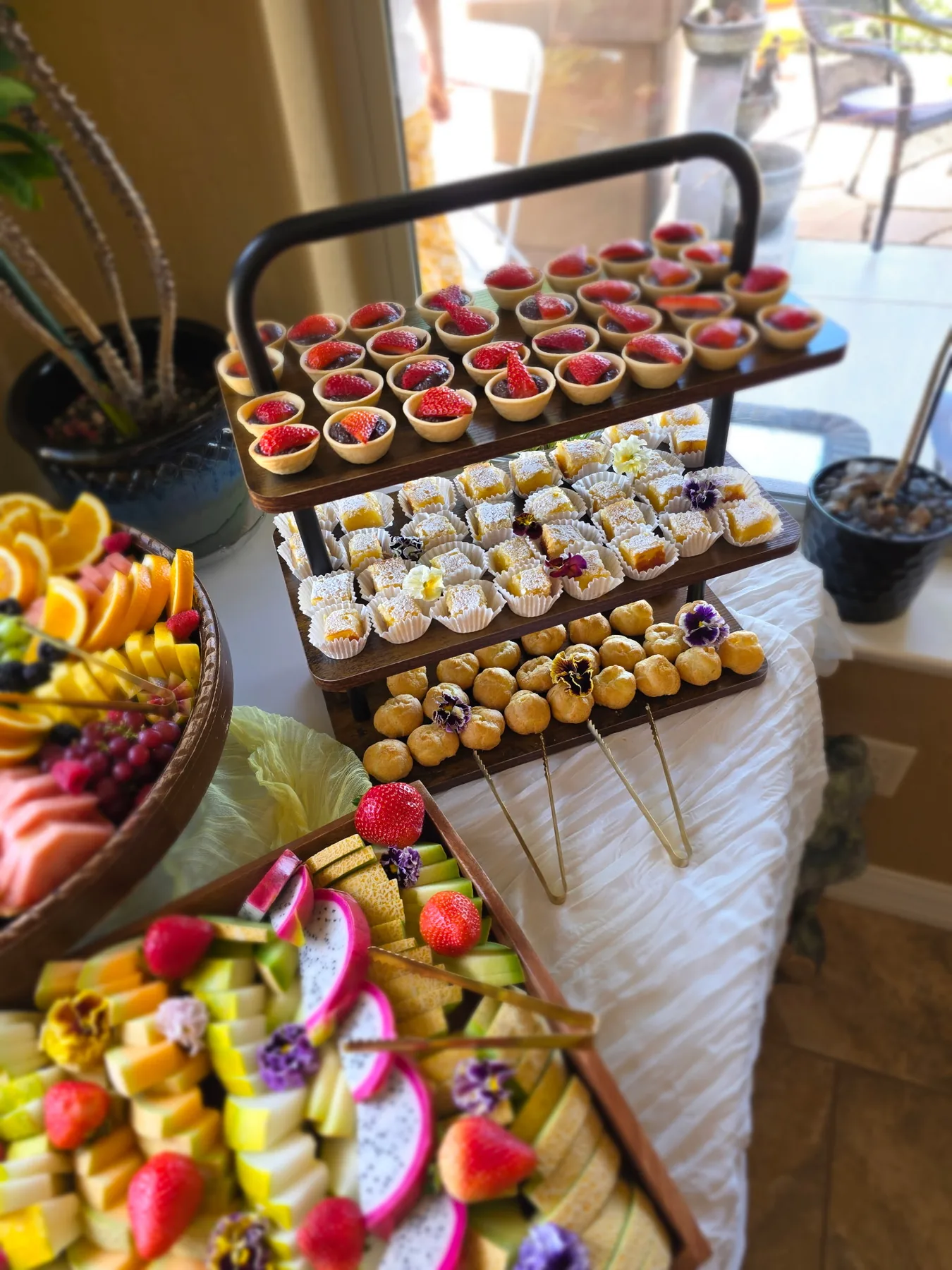
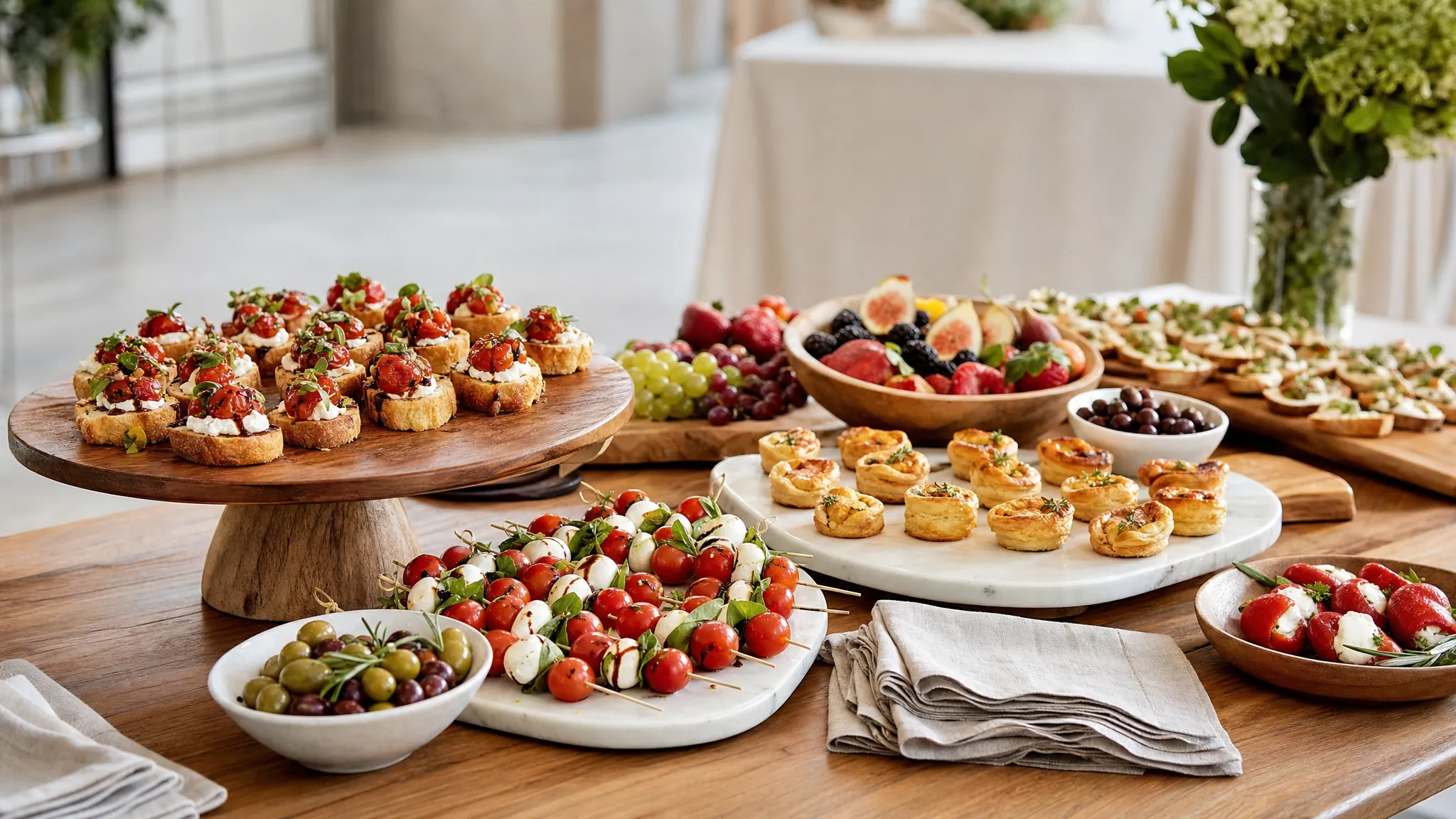
The best cocktail-hour appetizers make guests feel looked after before they have even found their first conversation. They should be easy to pick up, satisfying enough to bridge the time before a meal, and varied enough that everyone sees something they want to try.
That does not mean putting every possible bite on one table. A strong appetizer menu has a point of view. It offers contrast in flavor, texture, temperature, and portion size, then serves those choices in a way that keeps the room moving. Whether you are planning a shower, open house, reception, or backyard gathering, this guide will help you choose appetizers that feel generous without becoming fussy.
Start with the job your appetizers need to do
Before making a menu, decide what cocktail hour means for your event. Sometimes it is a short welcome before a full dinner. Sometimes it is the main food moment, with guests arriving over an hour or more. Those are very different jobs, and they call for different amounts of food.
For a brief transition before a meal, choose a few lighter, polished bites. Fresh vegetables, crostini, skewers, fruit, cheese, and a small warm option give people something to enjoy without crowding out dinner. When the gap before dinner is longer, or there is no sit-down meal to follow, add appetizers with more staying power: mini sandwiches, savory pastries, meatballs, warm dips, or a fuller grazing display.
Look at the way guests will actually use the room, too. At a standing reception, food needs to work in one hand. At a garden shower with seating, you can be a little more relaxed with composed cups, shared boards, or small plates. The practical test is simple: can a guest take a bite, keep talking, and avoid searching for a table?
Build a menu around four kinds of bites
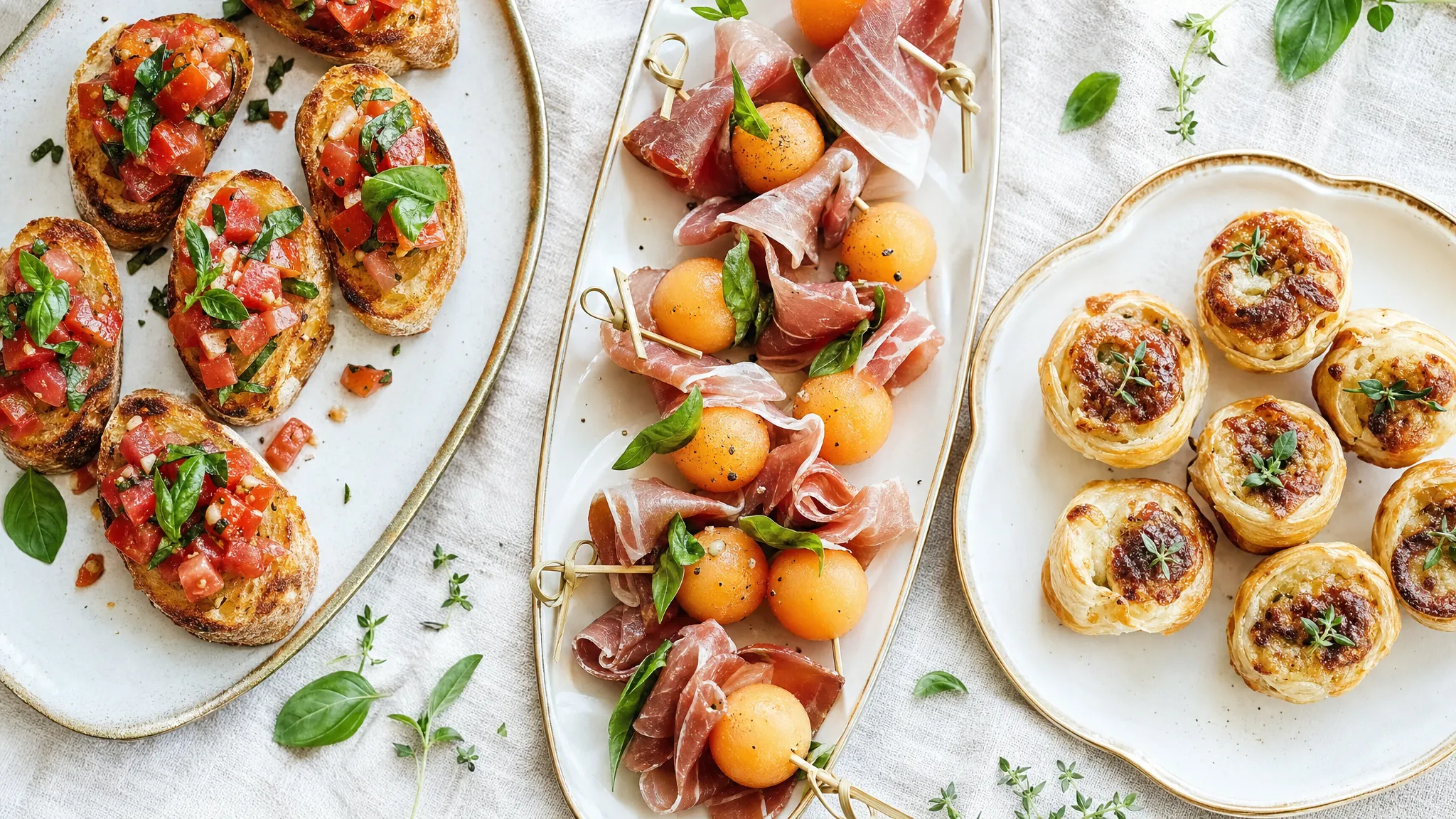
A good cocktail-hour appetizer menu is not about chasing novelty. It is about giving guests enough contrast that the table stays interesting. Start with four useful roles, then choose one or two appetizers for each role that fit your crowd and setting.
Something crisp and fresh: Think seasonal vegetables with a bright dip, cucumber bites, fruit, caprese skewers, or chilled shrimp when the service plan allows it. Fresh options give the menu lift and balance richer foods.
Something familiar: A recognizable favorite gives every guest an easy yes. Bruschetta, a simple cheese-and-cracker selection, mini sandwiches, stuffed mushrooms, or a well-made dip can feel special when it is served with care.
Something warm or hearty: One satisfying bite changes the feeling of the whole spread. Savory pastry, meatballs, small sliders, warm crostini, or a substantial vegetarian bite can carry guests through a longer cocktail hour without turning it into dinner.
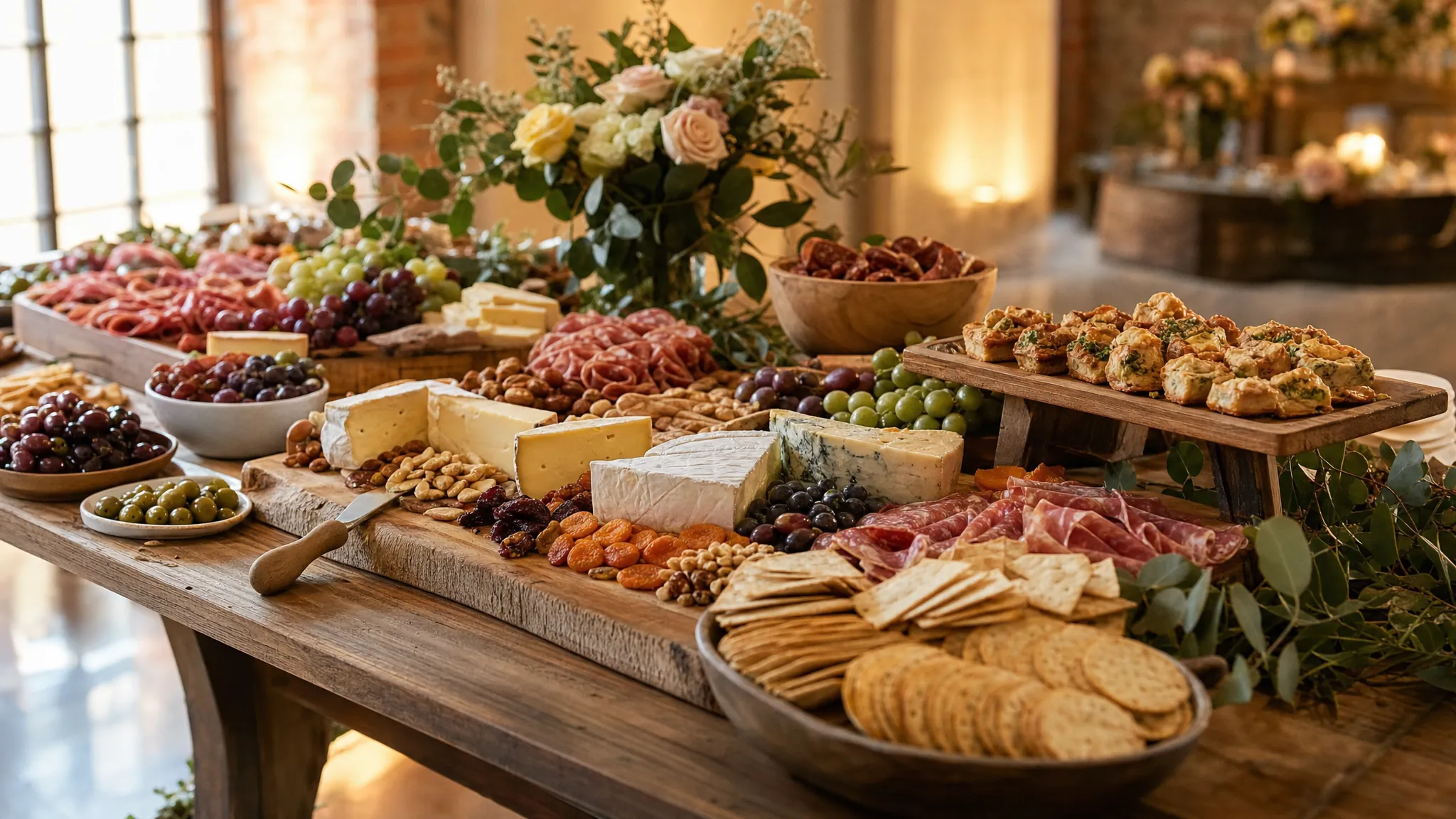
Something visual: A grazing table, generous board, colorful platter, or a station with a clear point of view makes food part of the setting. This is the piece guests notice first, and it gives them a natural place to gather.
When every item fills the same role, the menu can feel repetitive even if the recipes are different. A table full of creamy, bread-based bites gets heavy quickly. Pair soft with crisp, warm with chilled, and familiar with one thoughtful surprise. That contrast helps the whole menu feel more abundant.
Choose appetizers that are easy to eat while standing
Guests at cocktail hour are usually holding a drink, greeting people, and moving between spaces. The most successful appetizers respect that. Favor bites that stay together, do not require cutting, and can be finished in two or three bites.
Skewers, crostini, small tartlets, vegetable cups, mini sandwiches, and neatly portioned savory pastries are reliable because they are easy to pick up and easy to understand. A grazing display also works beautifully when it has clear serving tools, ample napkins, and enough room for guests to approach from more than one side.
Use extra care with anything fragile, saucy, or drippy. That does not mean avoiding it altogether. It means giving it the right vessel, plate, or serving setup. A warm dip can be a crowd favorite, but it needs sturdy dippers and a place for guests to set down a drink. A delicate canapé can feel elegant, but it needs to be compact enough to eat gracefully.
Balance warm and cold service
A blend of warm and cold appetizers makes a cocktail hour feel complete. Cold items can be set out early and refreshed in tidy batches. Warm bites add comfort and make the menu feel more substantial. Together, they create a rhythm instead of a single note.
For a warm afternoon or outdoor event, let chilled produce, fruit, cheeses, and crisp bites do more of the work, then bring out warm items in smaller waves. For a cool evening or a longer reception, a warm appetizer can be the reassuring element guests reach for first. The best balance depends on the season, the setting, and when the next course arrives.
Do not make the whole menu depend on last-minute cooking. Choose a few items that look and taste good at their intended serving temperature, then reserve the more time-sensitive bites for a service plan that can keep them fresh. That gives you a better experience than a table of foods that were perfect five minutes earlier.
Give the room more than one way to get food
A single beautiful table can still create a bottleneck. If everyone arrives at once, guests will naturally gather around the first food they see. Plan the setup so people can move through the space rather than queue at one end of it.
One approach is to pair a central grazing display with passed appetizers. The display gives the room a visual centerpiece, while passed bites reach guests who are deep in conversation, outside on a patio, or waiting away from the main table. Another option is to split the menu into small stations: fresh bites in one area, warm appetizers in another, and drinks or dessert somewhere else.
For a gathering where food should become part of the welcome, Dolce’s custom charcuterie service creates a grazing centerpiece shaped around your guest count and occasion. Pair it with passed finger foods and display bites when you want a menu that keeps reaching guests throughout the hour.
Plan portions around timing, not guesswork
There is no useful universal number for every cocktail hour because the right amount depends on what comes next. A short welcome before dinner needs a lighter hand than a two-hour open house or reception with no meal. Start by writing down the arrival time, the planned end of cocktail hour, and when guests can expect the next substantial food.
If the menu is only filling a short gap, prioritize variety over volume. If it is carrying a longer stretch, make sure there is at least one hearty option and enough replenishment built into the plan. Guests who arrive straight from work or travel will be hungrier than guests who have just left a meal, and an early-evening event often needs more substance than a mid-afternoon shower.
It is also wise to plan for the pace of arrivals. When everyone enters at once, the first table should look full before the door opens. When guests arrive gradually, smaller trays refreshed throughout the hour can keep the experience from feeling picked over. The goal is not to make every surface heavy with food. It is to make guests feel that there is always something good within reach.
Make dietary needs part of the first plan
Dietary planning works best when it happens before the final menu is set. Ask about allergies and preferences early, then build a few options that feel intentional rather than separate. A substantial vegetarian bite, a clearly kept gluten-conscious option, and a familiar choice for cautious eaters can make a gathering feel more welcoming to everyone.
Labels do not have to take over the table, but guests should be able to tell what they are choosing. Use distinct serving utensils and thoughtful placement to prevent food from getting mixed together. If a guest has a serious allergy, talk with the caterer directly about the safest way to handle that need rather than relying on a label alone.
When a menu is built around contrast, it is easier to include choices naturally. Fresh vegetables, fruit, cheeses, plant-forward bites, and hearty savory options can all have a place without making the table feel divided into “special” food and everything else.
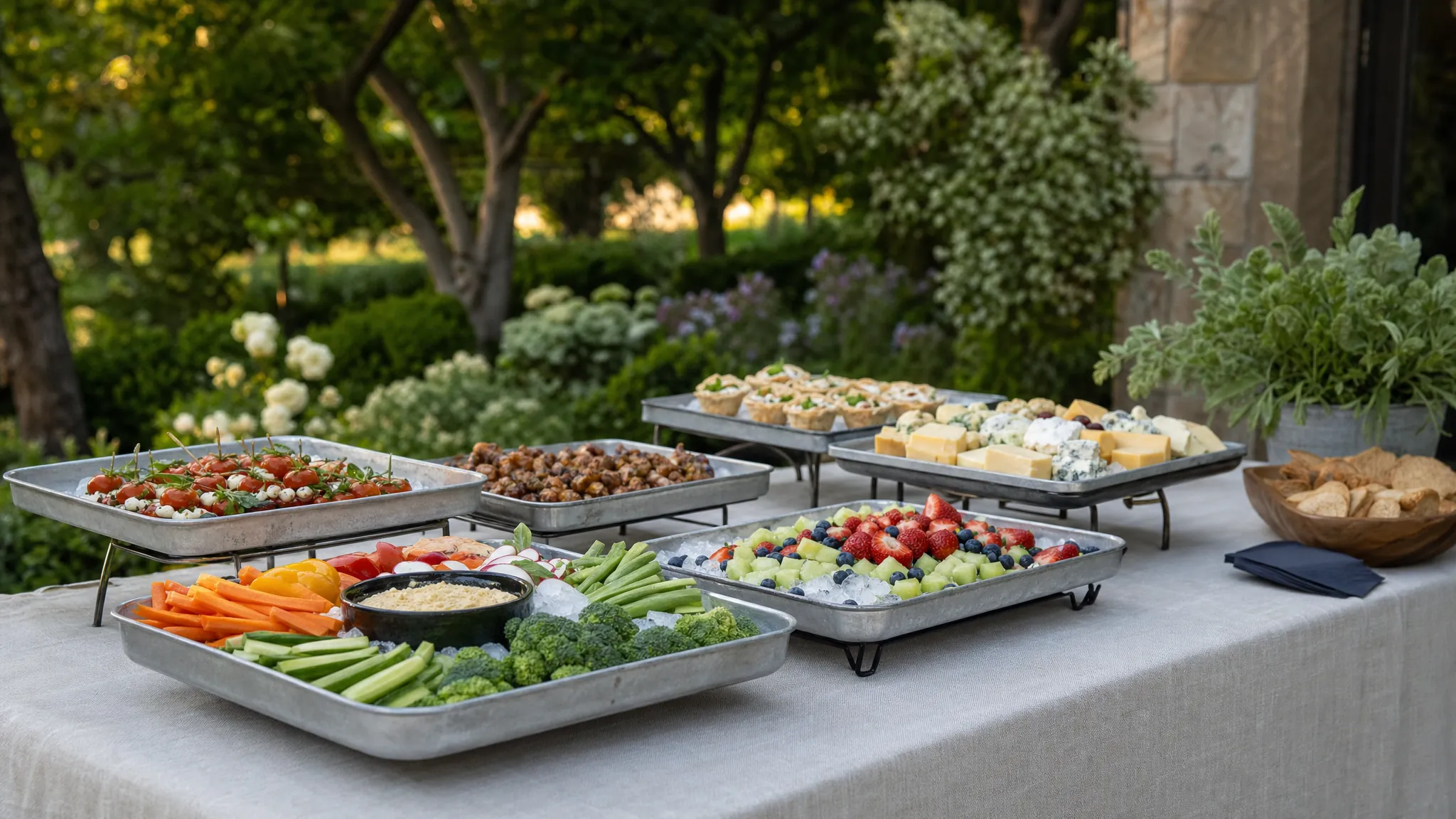
Keep outdoor appetizers beautiful and safe
Outdoor cocktail hours are lovely, but sun, wind, and changing temperatures ask more of the food plan. Give perishable foods shade and bring chilled or warm items out in smaller batches instead of placing everything on the table at once. That keeps the display looking fresh and makes it easier to manage the flow.
The U.S. Department of Agriculture advises keeping buffet foods cold at 40°F or below and hot foods at 140°F or above. It also recommends replacing small serving platters within two hours, or within one hour when the temperature is above 90°F. Its buffet food-safety guidance is a helpful reference for hosts planning a long outdoor event.
Choose appetizers that can handle the setting. Small trays, clear replenishment, and a service point out of direct sun are more important than a huge display that has to sit untouched. Keep drinks, food, and napkins in separate zones so guests are not all crowded in one place. These details make the event feel calmer, and they protect the food at the same time.
Use a simple appetizer planning checklist
Once the menu starts to come together, step back and make sure each choice has a job. You should be able to point to a fresh option, a familiar option, something hearty, and a visual centerpiece. Then check the service plan: what will be ready when guests arrive, what will be passed or refreshed later, and where will guests find napkins, plates, and water?
It also helps to walk through the event from a guest’s point of view. Where do they enter? Will they go straight to a bar, a patio, or a photo moment? Are there areas where people will naturally gather away from the main table? A little planning around those moments prevents the menu from feeling hidden or unevenly distributed.
Finally, keep the occasion in view. A garden shower can feel light and bright. An evening celebration might call for warmer, more filling bites. An open house may need food that stays tidy while people move through a home. The best appetizer menu is not the one with the most items. It is the one that makes the particular gathering feel easy, welcoming, and well cared for.
Bring in help when you want to enjoy the hour too
There is a big difference between making a few favorite appetizers for friends and managing food for a full event. Once you are balancing arrival times, temperature, dietary needs, refills, setup, and cleanup, the host can spend the whole hour working instead of being part of it.
Dolce Fresh Market & Catering creates cocktail-hour food around the real rhythm of your gathering, from a custom grazing display to passed bites that move through the room. For a memorable finish, fresh-filled cannolis and tiramisu can turn dessert into a moment guests gather around. Explore the gallery for event inspiration, or talk with Dolce about your plans when you are ready to shape the menu.
Frequently asked questions
How many cocktail-hour appetizers should I choose?+
For most gatherings, a focused mix of four to six appetizer styles feels more generous than a very long menu. Include a fresh option, a familiar crowd-pleaser, a heartier bite, and something with visual appeal. Add more variety when the cocktail hour is long or replacing a meal.
What are the best cocktail-hour appetizers for a standing event?+
Choose appetizers that can be picked up with one hand and finished in two or three bites. Skewers, crostini, small savory pastries, vegetable cups, mini sandwiches, and neatly served grazing selections are easier for guests to enjoy while holding a drink and talking.
Should cocktail-hour appetizers be served hot or cold?+
A mix usually works best. Cold options keep the table fresh and easy to approach, while one or two warm bites make the menu feel more satisfying. The right balance depends on the weather, service setup, and how long guests will wait before the next meal.
Can Dolce help plan appetizers for an outdoor event?+
Yes. Dolce can shape cocktail-hour catering around the guest count, setting, season, and flow of the event. That includes grazing-style displays and passed finger foods designed to feel generous and easy for guests to enjoy.