The best cocktail hour food does not need to be complicated. It needs to make people feel welcomed from the first drink to the first dinner course. Guests are usually standing, reconnecting and looking around the room, so the menu has one job above all: make it easy to enjoy something good without stepping away from the moment.
That is why the strongest cocktail hours are designed around rhythm, not just recipes. A beautiful spread catches the eye, passed bites keep the room moving, and a few dependable favorites give every guest something they can enjoy. Use this guide to choose a menu that feels generous, looks considered and works with the way people actually gather.
Start with the shape of the hour
Before choosing a single bite, decide what cocktail hour is doing in your event timeline. Is it a quick welcome before dinner, a longer social stretch while photos finish, or the main food moment at an open house, shower or casual celebration? The answer changes what guests need.
For a short transition before a full meal, think bright, easy and a little lighter: a grazing display, fresh vegetables, crostini, skewers or a few passed bites. If dinner is later, the cocktail hour needs more staying power. Add a warm or more substantial option, such as sliders, meatballs, a small sandwich bite or a savory pastry. The goal is not to recreate dinner. It is to keep the room comfortable while the evening finds its pace.
Build from guest behavior, too. At a standing reception, food should be easy to hold in one hand. At a shower or garden party with tables, a composed plate or a more interactive station can work beautifully. The most useful question is simple: can someone take a bite, keep talking and avoid needing a full place setting?
Match the food to the timing
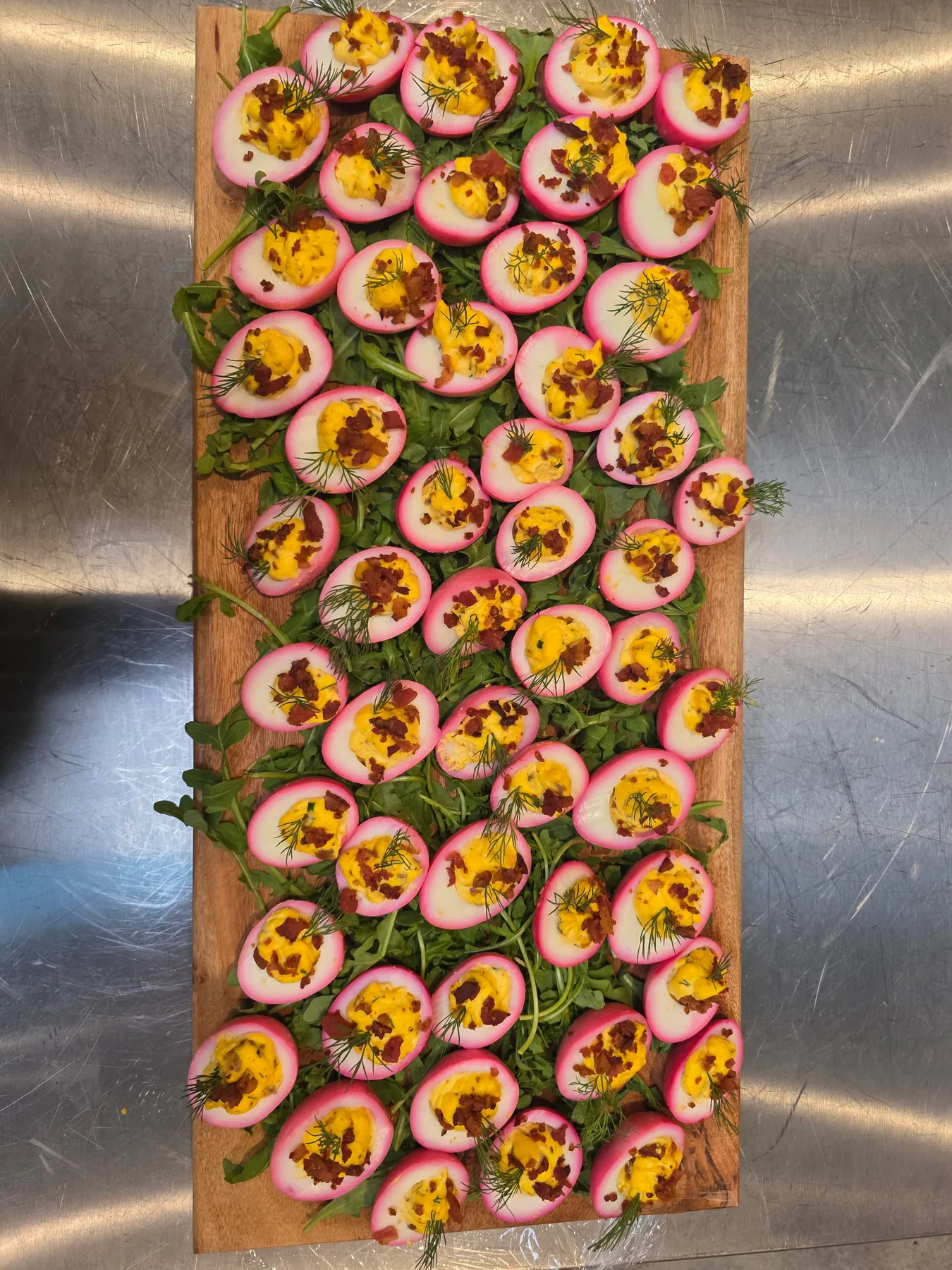
Timing is the quiet detail that makes a cocktail hour feel either easy or a little strained. Guests who arrive at 4pm after a long day have different needs than guests who have just eaten lunch before a 6pm ceremony. The same is true when the dinner hour is delayed by photos, a room reset or sunset. Use the time of day and the length of the gap before dinner to decide whether your menu should be light, substantial or somewhere in between.
For an earlier gathering, a grazing-focused menu with fruit, cheese, vegetables, dips and a few savory bites may be exactly right. For an evening event, add something warm and filling early in the hour, then keep refreshing the lighter options. A small sandwich, crostini, skewer or savory pastry does a lot of work because it feels satisfying without asking guests to sit down.
Think about arrival in waves, too. When everyone enters at once, make sure the first display is ready and easy to approach from more than one side. When guests filter in over time, passed bites and small replenished trays can keep the experience from feeling picked over. The point is not to overfeed people. It is to prevent that quiet moment when guests start wondering when dinner will appear.
Build a menu with contrast, not repetition
A menu becomes memorable when every option brings something different to the table. If every bite is creamy, fried or bread-based, guests lose interest faster than you might expect. A more balanced spread gives people a choice without making the menu feel scattered.
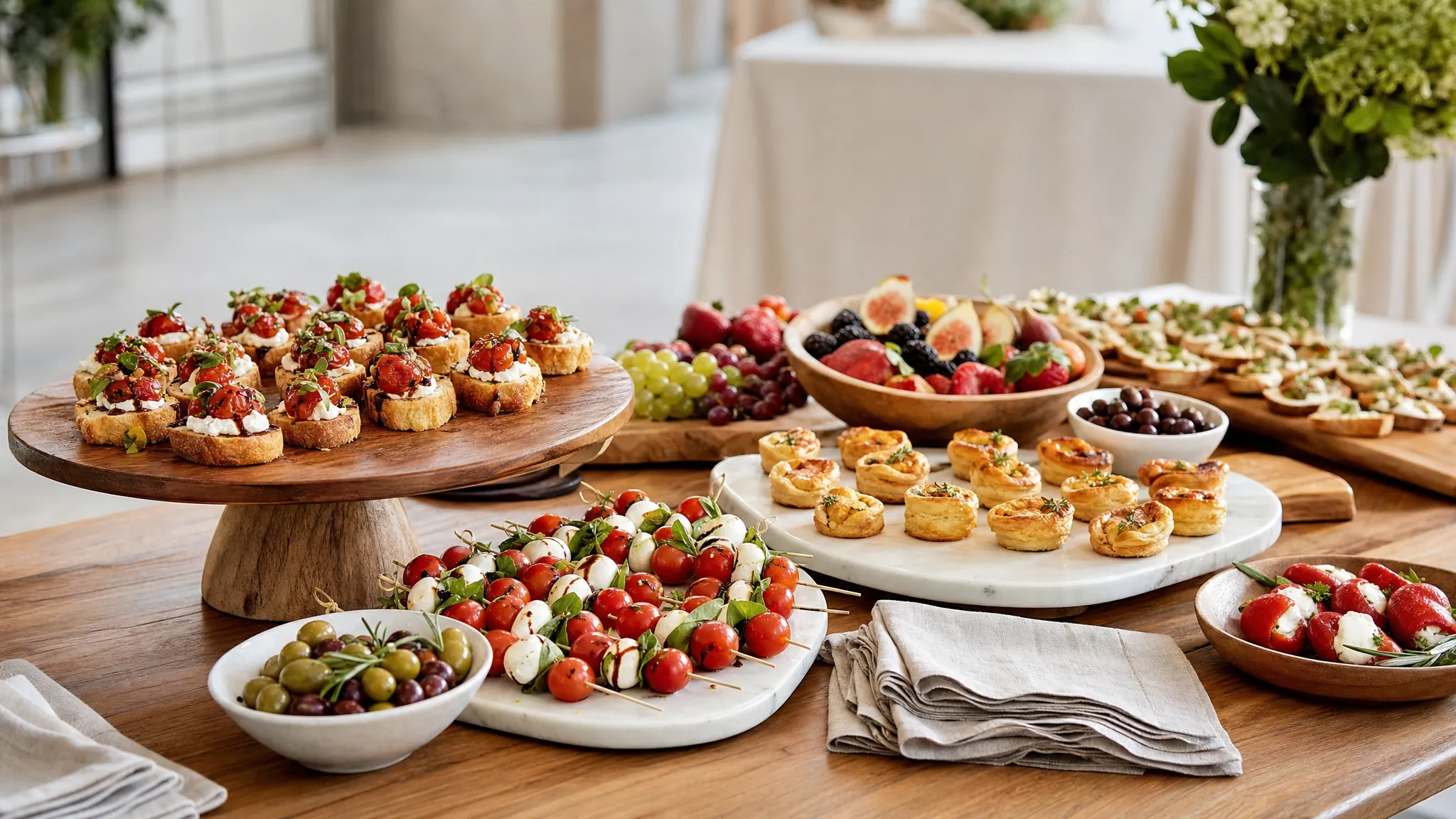
A useful starting mix includes one crisp or fresh element, one savory crowd-pleaser, one warm or hearty bite, and one visual centerpiece. That can look like seasonal crudités with a bright dip, tomato and basil bruschetta, a warm crostini or mini sandwich, and a grazing table with meats, cheeses, fruit and accompaniments. Add a sweet finish only when it fits the mood and timing.
Texture matters as much as flavor. Pair something crisp with something creamy. Balance salty cured meat with fruit, herbs or a little honey. Put a warm bite beside a chilled option. This gives the table dimension and helps guests find a combination that feels satisfying rather than heavy.
It is also smart to include a familiar choice. People enjoy trying something new, but a recognizable bite gives cautious eaters and younger guests an easy yes. As current wedding cocktail-hour inspiration shows, straightforward hand-held food can feel special when the portion, garnish and presentation are considered. Examples from real wedding cocktail hours often use this principle well: familiar flavors, made easy to enjoy while standing.
Choose the right service style
How food moves through the room is just as important as what is on the menu. A single table may look beautiful, but it can create a crowd at one end of the venue. Passed bites bring food to guests and make the experience feel lively. Small stations invite people to circulate. A mix of approaches keeps the flow natural.
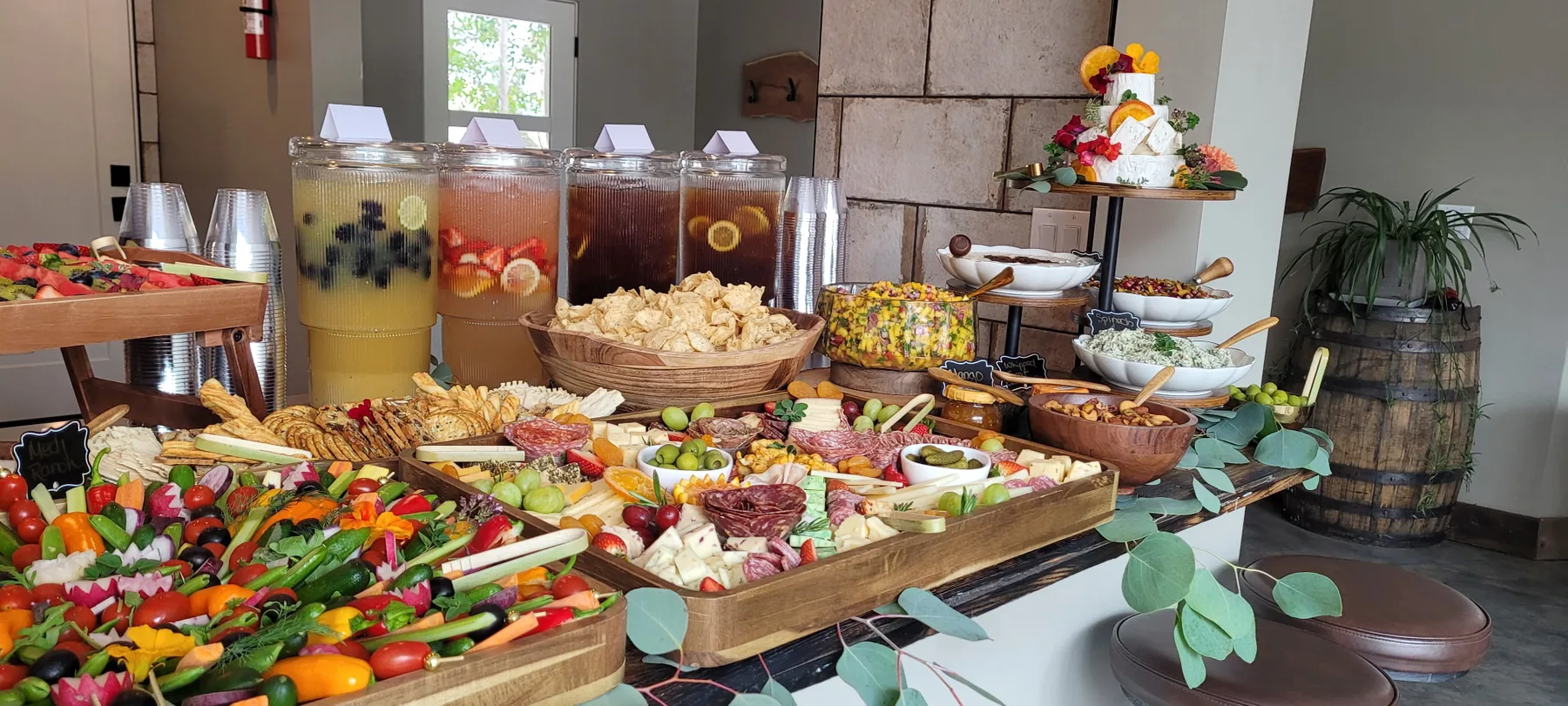
Grazing displays are especially good when you want the food to become part of the setting. They create a welcoming focal point and give guests something to gather around. A well-built display offers variety in a single stop, from fruit and cheeses to savory bites and crisp accompaniments. Dolce’s custom charcuterie service is designed for exactly this kind of moment, with a spread shaped around the guest count, setting and occasion.
Passed bites work well when guests are spread across a lawn, patio or large room. They help food reach people who are not standing near the main display and make the menu feel generous throughout the hour. For a wedding or reception, they are also useful when guests are moving between a ceremony space, bar and reception room.
Small stations give a bigger menu a sense of order. Rather than placing every option on one long table, group food by purpose: a fresh grazing area, a warm-bite station, a drink pairing moment or a dessert finish. It makes the room easier to navigate and gives guests natural reasons to move and mingle.
Let the season lead the flavor
Seasonality is one of the easiest ways to make cocktail-hour food feel deliberate. It does not require a themed menu. It simply means choosing flavors and formats that make sense for the temperature, light and setting of the day.
In spring and summer, lean toward crisp produce, citrus, herbs, chilled dips, fruit and lighter bites. Tomato bruschetta, melon and mozzarella skewers, fresh vegetables and citrusy seafood are natural choices for a warm patio or garden. In fall and winter, add more warmth and comfort: roasted vegetables, savory crostini, warm cheese, small meatballs, pastry bites or a richer spread with nuts, dried fruit and preserves.
In Prescott, outdoor events deserve special attention because warm days can turn quickly into cool evenings. Choose a menu that can flex with the temperature and give guests a mix of chilled and more substantial options. A thoughtful cocktail-hour menu can do both, with passed finger foods and grazing-style displays tailored to the rhythm of the gathering.
Do not forget the drink and napkin plan
Cocktail-hour food has to share space with drinks, and that changes what feels easy to eat. A brittle cracker that needs two hands, a sauce-heavy bite or a full bowl of food can be awkward when someone is also holding a glass. If the menu is designed for mingling, favor bites that are stable, clean and easy to finish in a few bites.
Set water close to the food, not just at the bar. Add enough napkins that guests do not have to carry them from another room. For anything saucy, offer a small plate or a sturdy vessel. These are modest details, but they make guests feel cared for and keep a beautiful display from turning into an accidental traffic jam.
Plan for dietary needs before the day arrives
Dietary planning is not an extra detail. It is part of good hosting. Ask for allergy and preference information early enough that it can shape the menu, rather than becoming a last-minute scramble. A few clearly distinct options can make a big difference: a vegetarian bite with real substance, a gluten-conscious choice that is not an afterthought, and an approachable option for guests who prefer familiar flavors.
Be clear about what is being served and keep serving utensils organized. If you are working with a caterer, share the guest list notes in advance and ask how foods will be labeled, separated and replenished. The U.S. food-safety guidance for catered and DIY wedding food also recommends giving the caterer information about guests’ allergies and dietary preferences before the event.
Protect the food, especially outside
A beautiful display has to hold up in the real setting. For outdoor cocktail hours, plan for shade, wind, sun and the time food spends on the table. Serve chilled foods in smaller batches, replenish them as needed and keep a reserve cold. Warm items need a reliable plan too, whether that is a warming tray, chafing setup or a service rhythm that brings them out at the right moment.
This is particularly important for foods with dairy, meat, seafood or eggs. FoodSafety.gov advises keeping cold foods at or below 40°F and hot foods at or above 140°F. When food is not kept at those temperatures, it should not remain at room temperature for more than two hours, or one hour in temperatures above 90°F. Their wedding food safety checklist is worth reviewing before an outdoor celebration.
Practical planning makes this easier. Use smaller trays instead of one oversized platter. Keep backup food ready to rotate in. Place drinks, napkins and food in different zones so guests are not all gathered in the same spot. These small decisions protect the food and make the event feel calmer.
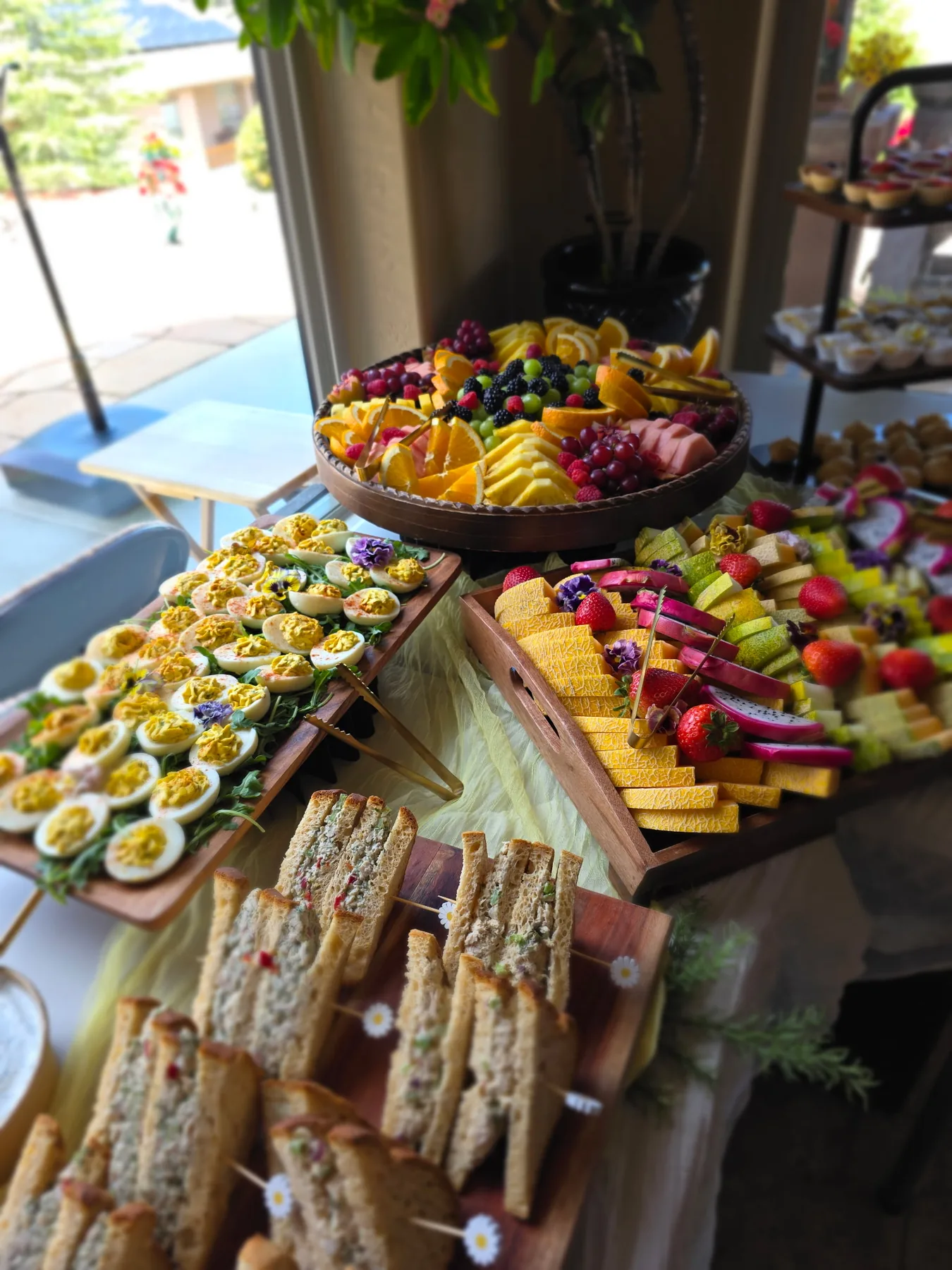
Make the presentation work for guests
Presentation should make food easier to enjoy, not harder to reach. Vary height so a table looks abundant, but keep the actual serving experience simple. Put napkins and small plates where guests will see them. Place tongs and spoons where they are needed. Avoid tiny labels that force people to lean over the food, and keep anything saucy or drippy close to a stable surface.
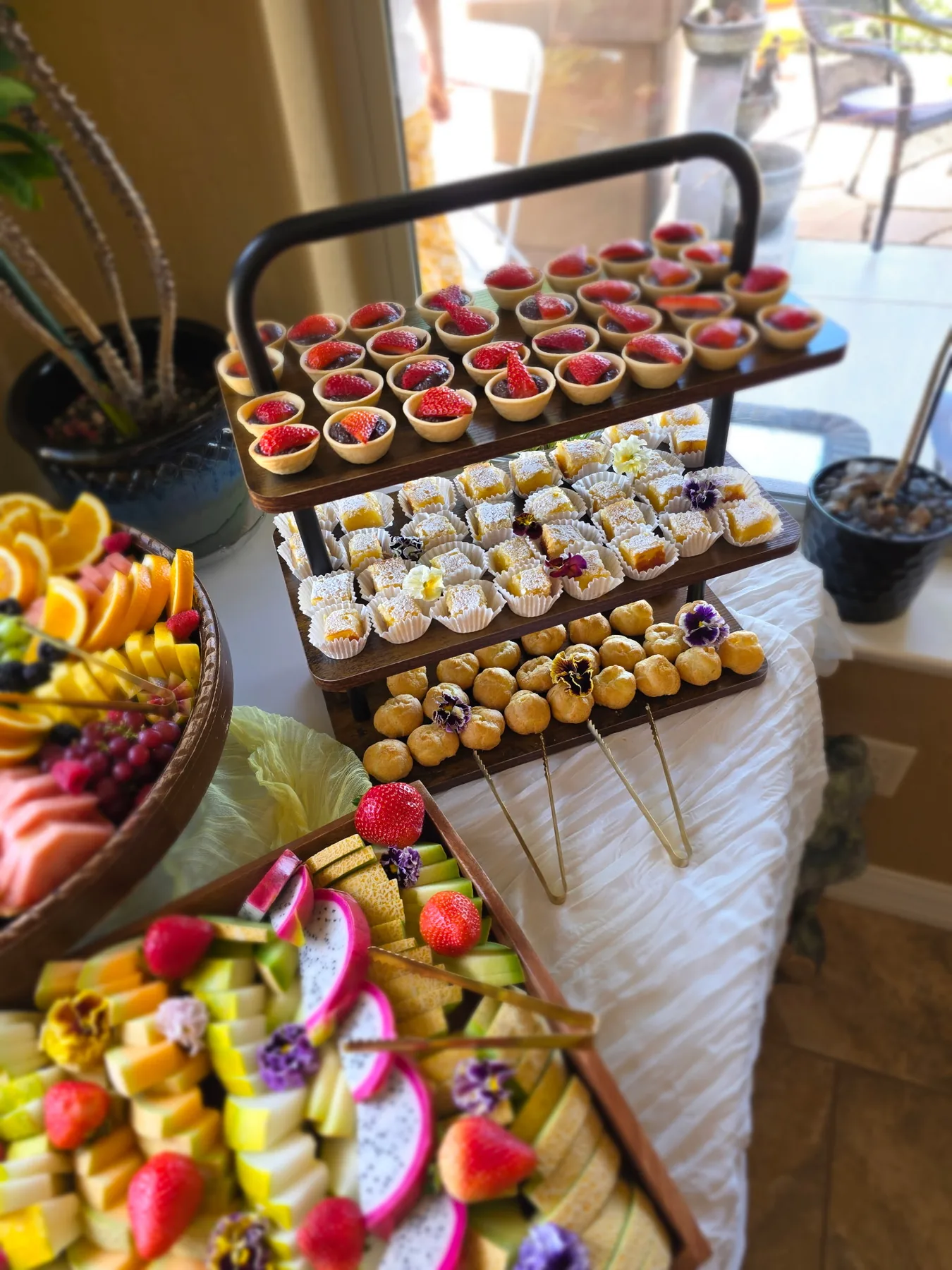
Color is the easiest way to make a table feel alive. Use fruit, herbs, vegetables, flowers and serving pieces to create contrast. A grazing board becomes more inviting when it moves from salty to sweet, soft to crisp and neutral to bright. A few intentional garnishes go further than a crowded table filled with unrelated details.
For a celebration where you want the food to be part of the experience, pairing the menu with a hands-on moment can be memorable. Dolce’s fresh flower bar gives guests a creative way to gather, make a bouquet and take something home, while the food keeps the room connected.
When it makes sense to bring in help
Hosting your own cocktail hour can be joyful, but it asks you to manage timing, temperature, refills and cleanup while you are also meant to be present with your guests. Bringing in help is most valuable when the food has to look beautiful for an extended window, guests will be moving through several spaces, or you want a menu that feels polished without spending the day assembling trays.
Dolce Fresh Market & Catering creates cocktail-hour catering with passed finger foods and grazing-style displays, then shapes the details around the mood, setting and guest list. For a more interactive finish, the team also offers fresh-filled cannolis and tiramisu that turn dessert into part of the gathering. You can see the range of food moments Dolce brings to events in the gallery, or start a conversation about your event when the details are taking shape.
Frequently asked questions
How many cocktail-hour food options should I serve?+
A short, well-balanced menu is usually more effective than a long list. Choose a few distinct bite styles, then make sure there is enough of each to circulate throughout the hour. Your final count depends on the guest list, the time of day, whether dinner follows, and how long guests will be waiting.
What food works best for an outdoor cocktail hour?+
Choose bites that are easy to hold, keep sauces contained, and can be refreshed in small batches. For warm weather, include crisp produce, chilled options and plenty of water. Avoid building the whole menu around foods that must sit in direct sun or need constant last-minute assembly.
Should cocktail-hour food match the dinner menu?+
It does not need to repeat dinner, but it should feel like part of the same occasion. A light, fresh opening works well before a fuller meal. For a casual reception, heartier bites can carry more of the menu. Use flavor, season and presentation to make the transition feel intentional.
Can a grazing display replace passed appetizers?+
A grazing display can be the main attraction for a relaxed cocktail hour, particularly when guests arrive together and can gather around it. Passed bites add movement and make sure food reaches guests who are busy talking or waiting away from the display. Many events are strongest with a little of both.